Let me tell you about my Uncle Frank.
He was my mother's older brother — the kind of uncle who showed up at every birthday with a card that had a twenty-dollar bill inside and a joke about how I'd better not spend it all in one place. He wasn't flashy. He wasn't sentimental. He was just... there. Dependable. Present. The kind of person you never really thought about until he wasn't there anymore.
He died in 2020. Not from anything dramatic — just the quiet, accumulative weight of being seventy-eight and having a heart that had worked hard for a long time.
I didn't go to his funeral. The pandemic made everything complicated. But I sent flowers, and I called my cousins, and I tried to be a good niece from six hundred miles away.
A few months after he died, my mother called me with a question.
She was cleaning out his house. Going through his things. "I don't know what to do with his stuff," she said. "He didn't have much. But what he had — I don't want to just throw it away."
She mentioned a few things. An old watch. A collection of fishing lures. A stack of books he'd read and reread.
And then she said something that stopped me.
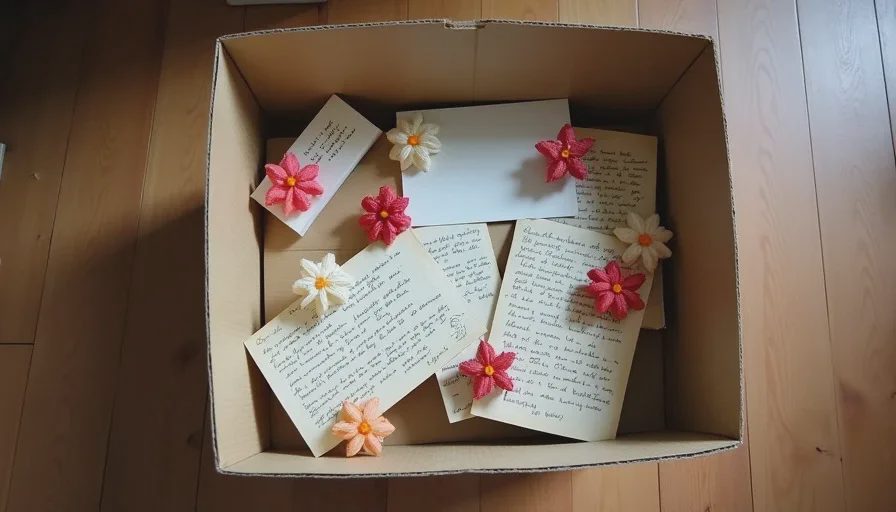
"He kept everything you ever gave him, Iris. Every card. Every gift. He had a box in his closet with all of it."
I didn't remember most of what I'd given him. A tie. A book. A pair of gloves one Christmas. Things I'd bought without thinking, because he was the uncle you gave something to because you had to, not because you'd put any real thought into it.
But he'd kept all of it.
He'd kept it for years.
What the Personal-Year 9 Actually Is
In numerology, your personal-year number changes every year. It's calculated from your birth date and the current calendar year. It's not a prediction — it's a theme. A lens through which you're experiencing this particular turn around the sun.
Personal-Year 9 is the last year of the cycle.
It's the closing chapter. The ending. The time when things wrap up, come together, and finally make sense.
Here's what the books say about a 9 year:
Completion and closure
Letting go of what no longer serves you
A time for reflection and review
Generosity and compassion — but not the kind that burns you out
Preparing for something new by honoring what's ending
And here's what I've learned from watching people in their 9 years:
It's not a year for accumulation. It's a year for memory.
In a 9 year, the things that matter most aren't the things you can buy. They're the things you've already lived. The people you've loved. The stories you've told. The gifts you've given and received that carried something more than a price tag.
Money doesn't land in a 9 year.
Meaning does.
Why Money Fails in a Personal-Year 9
I've been tracking this in the gift diary for years. When someone is in a 9 year, the gifts they receive that cost a lot of money often land with a thud. Not because they don't appreciate the gesture — but because they're not in a place to need things. They're in a place to reflect on things.
Here's what I see again and again:
A 9 year is a year of unwinding.
People in a 9 year are often decluttering — literally or metaphorically. They're letting go of old patterns, old relationships, old stuff. They're looking around at what they've accumulated and asking: "Do I need this anymore?"
If you give them something new, something shiny, something expensive, you're adding to the pile. And they don't want more pile. They want less.
A 9 year is a year of endings.
People in a 9 year are often dealing with things ending — a job, a relationship, a phase of life, sometimes a person. They're carrying grief, complexity, and the weight of transitions.
If you give them something expensive, they don't know where to put it. It doesn't fit the story they're trying to close.
A 9 year is a year of meaning, not value.
People in a 9 year aren't asking "how much does this cost?" They're asking "what does this mean?" They're orienting toward the past, toward the people they've loved, toward the memories that carried them.
If you give them something that doesn't carry a story, it doesn't matter how much you spent.
What Works in a Personal-Year 9
The best gifts for someone in a 9 year are gifts of memory.
Not nostalgia — not the kind of sentimental that feels forced. But memory that's earned. Things that say: "I remember. I was there. You mattered to me then, and you matter to me now."
1. A gift that honors something they're letting go of.
If someone you love is in a 9 year, they're probably saying goodbye to something. Maybe it's a house. Maybe it's a job. Maybe it's a chapter of their life that's closing.
Give them something that honors what's ending. Not to make them sad — to acknowledge it.
A framed photograph of the place they're leaving. A letter that says "I remember when you started that job, and I remember how proud you were." A small object from a place you both loved, now gone.
Don't make it about grief. Make it about witnessing.
2. A gift that helps them hold onto a story.
People in 9 years are gathering their histories. They're reviewing their lives. They're taking stock.
Give them something that helps them hold onto a story — their own, yours, someone else's.
A beautiful, empty scrapbook. A set of archival boxes for old photographs. A blank journal with a note that says: "I want to know your story. When you're ready, I'm ready to listen."
Not a book about someone else. Something that holds their story.
3. A gift that acknowledges you were part of their past.
People in 9 years are thinking about legacy. They're thinking about who was there, who mattered, who remembered.
Give them something that says: "I was there. I remember. And I'm glad I was."
A letter. A small object from a shared memory. A photograph from a time you shared. A piece of art or a small token that references something only the two of you know.
4. A gift that doesn't add to their clutter — but replaces it with meaning.
If they're decluttering, don't add to the pile. But if you can offer something that replaces an object they're letting go of — with something that carries more meaning — that's a 9-year gift that works.
I gave a friend in her 9 year a single, beautiful bowl from a potter we both loved. She'd been giving away her grandmother's old dishes — too many, too heavy, too much to store. I said: "This isn't more. It's just one. It holds what matters."
She uses it every day.
What I Finally Understood About Uncle Frank
When my mother told me about the box, I had to sit down.
I thought about all those gifts I'd given him without thinking. The tie. The book. The gloves. Things I'd bought because I felt like I should, not because I'd really seen him. And he'd kept every one.
Not because they were valuable. They weren't.
Not because they were useful. The tie was from 2005. He never wore ties.
He kept them because I gave them to him. Because I was his niece. Because I was part of his life, even when I didn't know I was part of his story.
I called my mother back.
"Don't throw any of it away," I said. "I want it. All of it."
She sent me a box. And inside was everything I'd ever given him — things I'd forgotten, things I barely remembered. Cards with my twelve-year-old handwriting. A wooden keychain from a school trip. A photograph of me and my cousins at a birthday party.
He'd kept it all.
For twenty years, he'd held onto the evidence that someone in the world was paying attention to him. Even when I wasn't. Even when I didn't know I was.
What This Means for You
If you're reading this and you know someone in their Personal-Year 9 — or if you're in your own 9 year and wondering what you'd actually want to receive — I want to give you a rule.
The 9-year gift rule:
Give them what they can't buy.
You can't buy a memory that's already been lived. You can't buy the story of a shared moment. You can't buy proof that you were there, that you noticed, that you're still noticing.
But you can give them all of these things.
Not with money. With attention.
Write them a letter. Find an old photograph. Put together a small collection of things that remind you of them — not things from a store, things from your own life that they're part of.
Make a playlist of songs that you both remember. Send them a copy of a book you once read together. Tell them the story of something that happened ten years ago, the way you remember it, and ask them to tell you their version.
Those are the gifts of a 9 year.
They're not expensive. They're not flashy. They don't come with a gift receipt.
But they sit in a box in the back of someone's closet for twenty years — because you gave them.
Because you saw.
Because you were there.
The Only Gift I Still Want to Give
I never got to say goodbye to Uncle Frank properly. I never got to tell him that I remembered him, that I was glad he was my uncle, that the twenty-dollar bills and the silly jokes added up to something I'd carry with me.
But I have the box now. I have the tie, the book, the gloves, the cards.
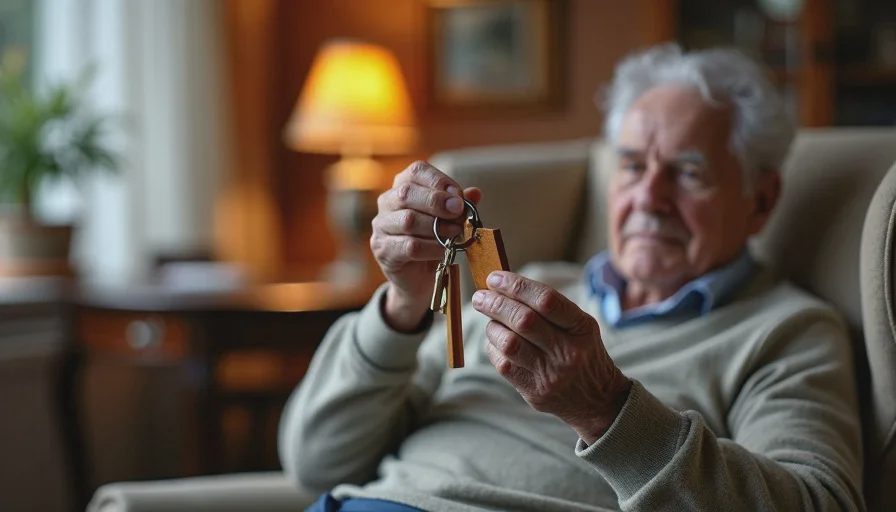
And I have a small wooden box of my own — the one I gave him the last Christmas I saw him, when I didn't know it would be the last. He'd kept it in the box with everything else.
Inside, there was a piece of paper with my handwriting on it, from years ago, when I was thirty and didn't know how to say things directly.
It said: "You were always there. I don't say it enough. But I see you."
He kept it. For years.
That was my 9-year gift to him, and I didn't even know I was giving it.

No notes yet — write the first one.