
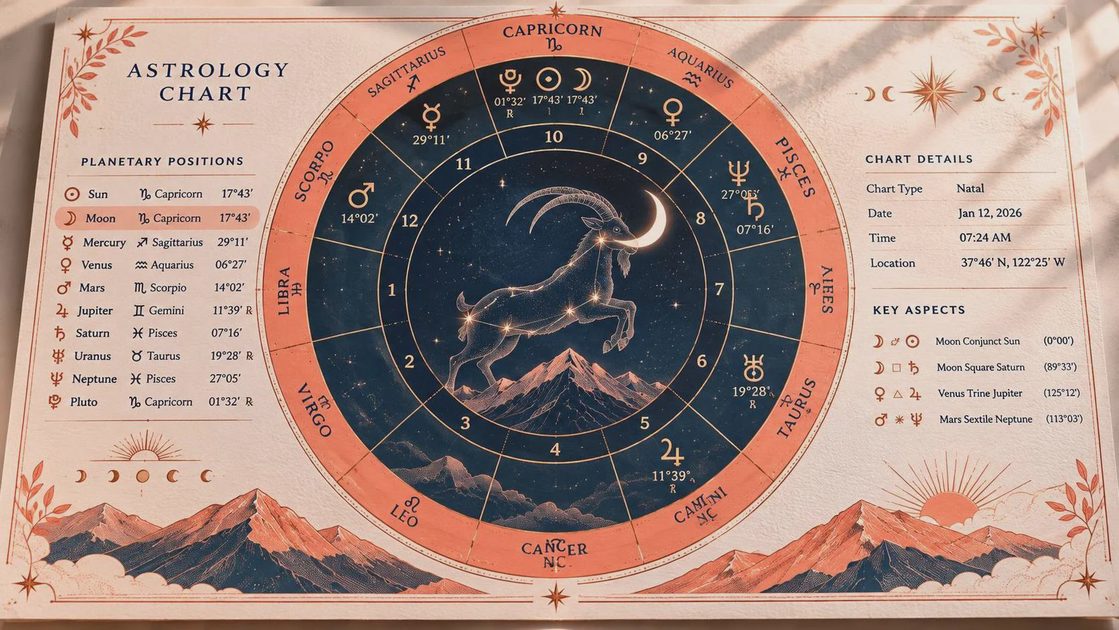
A Capricorn moon describes a person whose emotional life is often organized around responsibility, stability, and long-term security. In astrology, the Moon represents feelings, instincts, comfort, and the private self. Capricorn gives those needs a practical, disciplined structure. The result is not a lack of emotion. It is an instinct to manage emotion carefully, prove reliability, and build conditions where life feels under control.
Someone with a Capricorn moon may not share every feeling immediately. They may prefer to think through a problem, make a plan, and return with a useful solution. Their care often appears through actions: paying a bill, handling a difficult appointment, repairing something, or remembering a deadline. If you are trying to understand this placement, watch what happens behind the composed exterior. There is usually a strong need for respect, competence, and dependable support.
How a Capricorn Moon Processes Feelings
The first emotional response can be restraint. Rather than reacting openly, a person with a Capricorn moon may ask what needs to be done next. This can be valuable during a crisis, when someone must make decisions instead of adding confusion. It can also become tiring if every feeling is treated like a task to complete.
Many people with this placement learned early that being capable earned approval. They may have taken on responsibilities at home, in school, or at work before they felt ready. As adults, they can become the person everyone calls when a schedule breaks down. Their strength is real, but so is the risk of assuming they must carry every load alone.
The emotional vocabulary of a Capricorn moon tends to grow through experience. A person may first say, “I am busy,” when the deeper truth is that they feel disappointed, afraid, or unsupported. Naming the underlying emotion is not indulgent; it makes decisions more accurate. A schedule can solve a missed appointment, but it cannot always solve loneliness.

Security, Home, and Daily Comfort
For a Capricorn moon, comfort often comes from predictability. A paid bill, a stocked pantry, a clean work area, or a clear plan for the week can lower stress quickly. This placement is usually less interested in temporary excitement than in creating something that still works six months from now.
That does not mean every Capricorn moon wants a rigid lifestyle. The key is control over essential conditions. A flexible afternoon can feel relaxing when rent, transportation, and basic commitments are already handled. By contrast, a glamorous setting can feel uncomfortable if the person cannot trust the people or logistics involved.
In a home setting, this placement may show care through maintenance and preparation. It might research a contractor, compare warranties, or replace a failing appliance before it becomes an emergency. The blind spot is treating rest as something that must be earned. A home should support recovery, not become another project management system.
When planning a major change, the practical approach helps. Write down the monthly cost, expected timeline, backup option, and one point at which the plan should be reviewed. That structure gives the emotional side enough safety to participate instead of forcing it to hide behind competence.
Capricorn Moon in Relationships
A Capricorn moon usually values consistency more than dramatic declarations. Reliability builds trust: showing up when promised, answering a difficult message, and following through after the exciting beginning has passed. A partner does not need to perform constant romance, but they do need to demonstrate that their words connect to behavior.
Affection may be expressed indirectly. Instead of saying “I am worried about you,” this person might arrange a ride, bring food, or help solve a financial problem. They often notice practical details that others overlook. Partners can miss the meaning if they expect affection to arrive only as verbal reassurance.
The challenge is emotional availability. Silence can look like indifference, especially when the person is actually overwhelmed. A useful relationship conversation is specific: “When you go quiet after an argument, I do not know whether you need time or want to leave. Tell me which one.” Clear requests work better than hints because this placement often responds to defined responsibilities.
A healthy Capricorn moon also needs to receive care without immediately repaying it. Keeping score can turn love into a ledger. Shared responsibility matters, but intimacy includes accepting help simply because the relationship has room for mutual generosity.
Strengths at Work and Under Pressure
At work, a Capricorn moon can be excellent at sequencing tasks, protecting resources, and staying functional when plans change. This person may notice that a small delay in procurement will create a larger delay for several other teams. They are often comfortable with budgets, milestones, quality checks, and consequences that are months away.
That strength becomes especially visible in a renovation, business launch, or household transition. A person with this placement may create a calendar, confirm lead times, and keep a record of decisions. The useful rule is simple: if it is not on the schedule, it is not happening. But a schedule also needs buffer. A plan that leaves no room for illness, shipping delays, or inspection changes is not disciplined; it is fragile.
Under pressure, the Capricorn moon can become overly controlling. Delegating feels risky when other people have missed deadlines before. The practical correction is to assign ownership in writing, define the handoff, and set a check-in date. That protects standards without requiring one person to supervise every minute.
Common Challenges and Better Habits
The main challenge is confusing emotional suppression with emotional maturity. Staying calm is useful, but postponing every difficult conversation can turn a manageable concern into resentment. Set a time to revisit the issue rather than pretending it does not exist.
Another challenge is harsh self-evaluation. A Capricorn moon may judge a normal mistake as evidence of personal failure. Use a post-mortem instead: identify what happened, what was outside your control, what warning sign was missed, and what procedure will change next time. This keeps accountability concrete and prevents shame from taking over.
Rest also needs a place on the calendar. Schedule an evening without errands, protect a weekend morning, or set a firm end time for work messages. These are not rewards for finishing everything. Everything is rarely finished. Rest is maintenance for the person responsible for the rest of the system.
Making the Placement Work for You
The strongest expression of a Capricorn moon is not emotional distance. It is dependable care with enough flexibility to remain human. Keep the practical tools: budgets, checklists, calendars, and follow-through. Add direct language about needs, regular recovery time, and permission to ask for help before a problem becomes urgent.
If you are close to someone with this placement, recognize the labor behind their quiet support. If you have the placement yourself, practice translating action into words. Say, “I am helping because I care,” and also say, “I need reassurance right now.” Those sentences make invisible needs visible.
Astrology is a reflective framework rather than a scientific diagnosis, so a full birth chart and lived experience matter more than one placement. Still, the Capricorn moon offers a useful question: what systems help you feel safe, and which responsibilities are you carrying only because you have become good at carrying them? The answer can turn endurance into a more sustainable form of strength.


No notes yet — write the first one.