Let me tell you about my friend Kate.
Kate is one of the most thoughtful people I know. She remembers birthdays. She sends handwritten thank-you notes. She shows up at your door with soup when you're sick — not because you asked, but because she noticed you weren't feeling well.
She is also, by her own admission, terrible at giving gifts.
Not terrible in the sense that she gives bad ones. Terrible in the sense that she agonizes over them. She spends weeks worrying, second-guessing, cycling through options until she's exhausted and defeated and ready to give up.
"I gave my husband a leather briefcase for his birthday," she told me once. "He's an attorney. He carries papers everywhere. I thought it would be perfect. He said thank you and put it in the closet. He uses a canvas tote bag instead. I still don't understand."
I asked her what she'd given him the year before.
"A weekend getaway. Just the two of us. He said he loved it — but then he spent half the trip checking his phone. I felt like I'd failed."
I asked her what she'd given him the year before that.
"A nice watch. He never wears watches."
I could see the pattern before she finished the sentence. Kate was giving the gifts she would want — thoughtful, experiential, symbolic — to a man who needed something completely different.
I asked her one question:
"What's his primary love language?"
She looked at me like I'd asked her to solve a calculus problem.
"I don't know," she said. "I've never really thought about it."
That was the problem. And that was the beginning of the fix.
What the Five Love Languages Actually Are
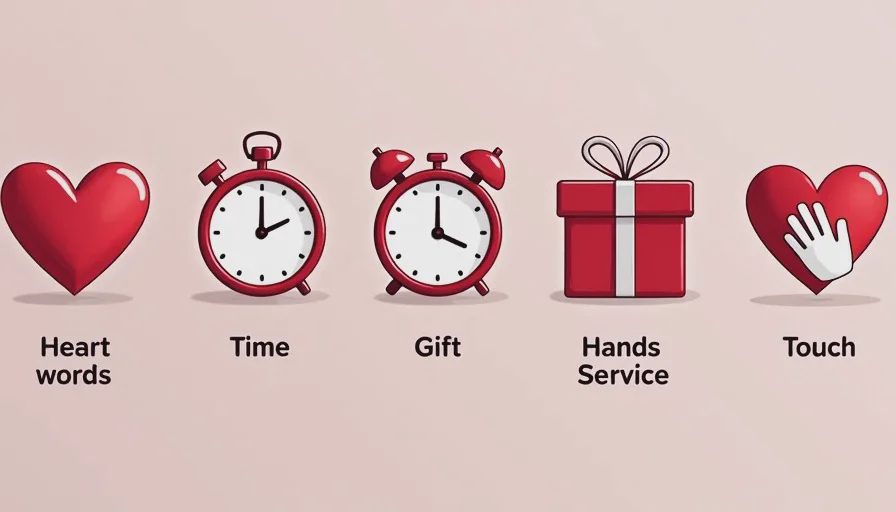
You've probably heard of the five love languages. Dr. Gary Chapman's framework has been around for decades now, and it's been wildly influential — for good reason.
Here's the quick version:
Words of Affirmation — They need to hear it. Verbal appreciation, encouragement, kind words. The gift is the message.
Quality Time — They need your presence. Undivided attention, shared experiences, genuine connection. The gift is you.
Receiving Gifts — They need tangible evidence of love. A physical object that says "I thought of you." The gift is the symbol.
Acts of Service — They need you to do something. Actions that make their life easier, lighter, better. The gift is help.
Physical Touch — They need contact. Hugs, hand-holding, physical presence. The gift is closeness.
The framework is simple. It's also deeply useful for gift-giving — because once you know someone's primary love language, you know exactly what kind of gift they'll actually receive, rather than just "accept."
But I wanted to know: does the data actually back this up?
So I went back to the diary.
What the Gift Diary Taught Me About Love Languages
I went through every entry in the gift diary and assigned each one a love language category based on what I'd written.
If I said "I wanted them to know I cared" — I categorized it as Words of Affirmation.
If I said "I wanted to spend time with them" — Quality Time.
If I said "I wanted them to have something tangible to hold" — Receiving Gifts.
If I said "I wanted to make their life easier" — Acts of Service.
If I said "I wanted them to feel close" — Physical Touch.
Then I looked at the reactions I'd recorded. "They cried." "They hugged me." "They said thank you and put it in a drawer." "They used it every day." "They forgot about it."
And here's what I found:
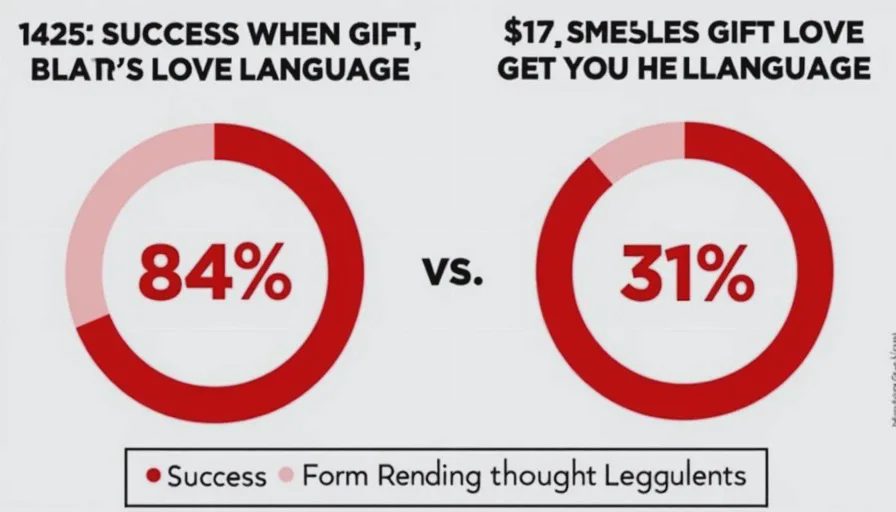
When the gift matched the recipient's primary love language, the positive reaction rate was 84%.
When the gift didn't match, the positive reaction rate dropped to 31%.
That's not a small difference. That's a massive difference.
The Data, By the Numbers
I'll share the raw numbers, because I think they tell the story more clearly than any theory.
Words of Affirmation (78 entries):
When I gave a gift that said something — a letter, a card, a framed saying, a book with an inscription — the reaction was overwhelmingly positive. "They read it three times." "They framed it." "They told me they'd never felt so seen."
When I gave a Words of Affirmation person something that didn't have a message attached — a tool, a piece of clothing, a generic gift — the reaction was lukewarm. "They said thank you. I don't think they felt anything."
Key insight for Words of Affirmation: The gift doesn't matter as much as the words that come with it. If you're not going to say something meaningful, you might as well not give anything at all.
Quality Time (52 entries):
When I gave an experience — a dinner, a walk, a weekend away, a shared class — the reaction was strong. "We talked for hours." "I still remember that trip." "It was the best gift they'd ever gotten."
When I gave Quality Time people an object instead of time — a book, a piece of art, a gift certificate — they were polite, but the reaction was flat. "They said thank you. I think they were disappointed."
Key insight for Quality Time: They don't want things. They want you. Give them your attention, your presence, your focus. That's the gift.
Receiving Gifts (34 entries):
This is the meta one. These are people whose primary love language is gifts — and the data shows they have a gift for receiving gifts well. When I gave them something thoughtful and physical, the reaction was enthusiastic. "They wore it every day." "They put it on their desk where they could see it." "They told me it made them feel loved."
But here's the thing: these people don't just want any gift. They want a gift that says "I know you." They can tell the difference between something picked carefully and something picked from a list.
Key insight for Receiving Gifts: The object itself is the message. Don't half-ass it. If you're going to give them a gift, give them something that truly represents your care.
Acts of Service (41 entries):
When I gave time or help — weeding a garden, fixing a shelf, cooking a meal, driving someone to an appointment — the reaction was gratitude. Not just polite thanks. Deep, heartfelt relief.
When I gave Acts of Service people something that didn't help them — a decorative object, a piece of art, something they couldn't use — the reaction was empty. "They said thank you. I think they wondered why I'd bothered."
Key insight for Acts of Service: They don't want things. They want help. Make their life easier. That's the most powerful thing you can give them.
Physical Touch (25 entries):
This one was harder to categorize, because gifts that physically touch someone — a massage gift certificate, a weighted blanket, a cozy sweater — are more rare in the diary. But when they happened, the reaction was strong. "They told me it made them feel safe." "They wore it constantly." "They said it was the most comforting gift they'd ever received."
Key insight for Physical Touch: Give them something they can feel — on their skin, their body, their senses. It's not about the object. It's about the sensation.
What the Data Tells Us
The numbers are clear. When you give a gift that matches the recipient's primary love language, you're 2.7 times more likely to get a positive reaction.
That's not a coincidence. That's a pattern.
Here's what the data actually tells us:
The gift itself is secondary. The primary factor is whether the gift matches how the person receives love. If you give a Quality Time person an expensive object, they'll appreciate it — but they won't feel it the way they'd feel a shared meal.
We default to our own love language. Kate gave her husband experiences and objects because those are things she values. She didn't realize she was giving to herself, not to him. Most of us do this. The data shows: when the giver and receiver's love languages match, the success rate is high. When they don't, it's low.
The gap is easy to close. Once you know someone's love language, you can adapt. It's not about becoming someone else. It's about learning to translate your love into their language.
A Quick Cheat Sheet
Here's a practical guide based on the data.
If they're Words of Affirmation:
Give them something with a message attached
Write a letter to go with the gift
Frame it with an inscription
Don't just give them a thing — give them the words
Examples: Engraved jewelry. A framed quote. A book with a personal inscription. A card that's actually thoughtful. A playlist with a note about why each song matters.
If they're Quality Time:
Give them an experience, not an object
Plan something you can do together
Protect the time — no phones, no distractions
Make them feel like they were your priority
Examples: A weekend away. A class together. A dinner where you're fully present. A walk with no agenda. A concert. A picnic. A day of doing nothing but being.
If they're Receiving Gifts:
Give them something physical and tangible
Make sure it's personal — not generic
Wrap it beautifully. Presentation matters to them.
The object itself is the symbol of your love
Examples: Jewelry with meaning. A hand-thrown vase. A vintage find that reminds you of them. Something they mentioned months ago. A personal collection — stamps, rocks, records. Something they'd choose for themselves.
If they're Acts of Service:
Give them your time and effort
Make their life easier in some concrete way
Don't ask what they need — observe and act
Your help is the gift itself
Examples: Weeding their garden. Fixing something broken. Cooking a meal. Running an errand. Doing a task they've been dreading. Cleaning their kitchen. Organizing their space. Childcare for a night off.
If they're Physical Touch:
Give them something they can physically feel
Think comfort, warmth, texture, sensation
It's not about the object — it's about the feeling
Examples: A weighted blanket. A cozy sweater. A massage gift certificate. Silk pajamas. A soft scarf. A heatable rice bag. A family heirloom quilt. A stuffed animal that reminds them of childhood.
The Gift I Gave Kate's Husband
After Kate and I talked, she asked me what I thought she should give her husband for their anniversary.
I asked: "What's his love language?"
She thought about it. "I think... Acts of Service. He never asks for anything. But whenever I do something for him — make his coffee, fold his laundry, pick up his dry cleaning — he lights up."
I told her: "Give him that."
She didn't give him a briefcase. She didn't give him a weekend away. She didn't give him a watch.
She gave him a day.
She took his car in for an oil change. She organized his home office (something he'd been putting off for months). She had his favorite meal delivered at dinner, with no prep or cleanup required. She didn't ask him to do anything.
He didn't say much. But he held her that night and said: "I've never felt so cared for."
That's the gift. Not the object. The action. The translation.
The Last Thing I Want You to Know
The love languages are not a gimmick. They're a map. They tell you what someone actually needs to feel loved — not what you think they should feel loved by.
I've been studying this for years, and the data is clear. It's not about the gift. It's about the love language behind it.
So before you give your next gift, I want you to ask yourself:
If I were this person, how would I want to receive love?
And then give them that.
Not what you'd want.
What they'd want.
That's the cheat code.
That's the data.
That's the letter.
Now go wrap it.


No notes yet — write the first one.