Let me tell you about the couple who almost broke up over a toaster.
They came to me separately — not as clients, not for therapy, but as friends who'd heard about the "gift lady" in Asheville who did things differently. Rachel and Tom had been together for seven years. They loved each other. They were committed. They had a mortgage and a dog and a shared Netflix account.
And they hadn't had a good gift exchange in four years.
"I give her things that I'd want," Tom said. "Thoughtful things. Beautiful things. And she looks at them like they're from a stranger."
"I give him things I've spent weeks thinking about," Rachel said. "Things that have meaning. And he says 'thank you' and I never see them again."
They weren't fighting about the objects. They were fighting about the miss.
And the miss was happening because they were speaking two completely different gift languages — and neither of them knew the other's existed.
The Gift Languages Framework — With a Card Spread
You've probably heard of the five love languages. Words of affirmation. Quality time. Physical touch. Acts of service. Receiving gifts.
That's a useful framework, but it's too broad for what we're doing here. Because "receiving gifts" is an entire category — and within that category, there are at least four distinct ways people actually receive and interpret a gift.
I've been tracking this in the diary for years, and I've come to call them The Four Gift Languages.
Here's what they are:
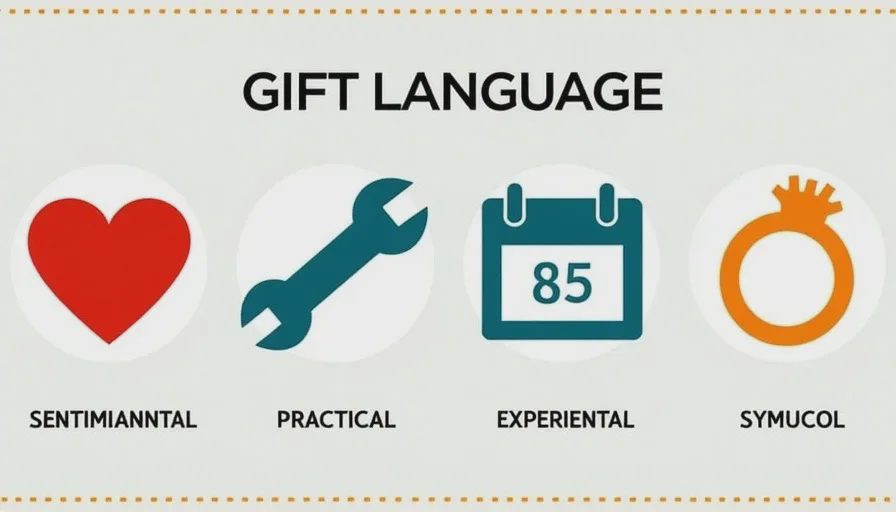
1. The Sentimental Language
They want meaning. The gift needs to tell a story. They want to know you remembered something — a conversation, a shared moment, a small detail they mentioned once. The object itself is secondary to the memory it carries.
2. The Practical Language
They want utility. The gift needs to be used. If it sits on a shelf, it's a failure. They want something that makes their life better, easier, more efficient. The thought matters, but the function matters more.
3. The Experiential Language
They want time. The gift needs to be shared. A concert ticket. A weekend away. A cooking class together. They don't want more things — they want more moments. The gift is the container for the experience.
4. The Symbolic Language
They want meaning of a different kind. The gift needs to represent something. A piece of jewelry that says "I'm yours." A compass that says "I'll always find you." A small, deliberate object that carries the weight of a promise. They want the gift to mean something beyond itself.
Most people — and most couples — are a mix of these. But there's usually one that dominates. And when your dominant gift language doesn't match your partner's, you end up with a lot of well-intentioned gifts that land like thuds.
That's where the spread comes in.
The Spread: Three Cards for the Gift Languages
This is a spread I developed specifically for couples who keep missing each other. It's simple, it's fast, and it's been more effective than three months of couples therapy (I'm allowed to say that — I'm a therapist).
Card 1 — Your Gift Language
What you think you're saying when you give a gift. Your default mode. What feels "right" to you.
Card 2 — Their Gift Language
What they need to receive. What actually lands for them — often different from what you assume.
Card 3 — The Bridge
What you can do — not to change your language, but to learn theirs. The practical step that closes the gap.
How to Read Each Card
Card 1 — Your Gift Language
This card tells you what you default to. It's not bad — it's just what comes naturally.
The Empress: You're likely a Sentimental giver. You give from the heart. You remember details. Your gifts are personal, and you expect them to be received as personal.
The Magician: You're likely a Practical giver. You give tools, solutions, things that solve a problem. You think: "This will help them."
The Lovers: You're likely an Experiential giver. You give time, presence, shared moments. You think: "We'll make memories with this."
The Hierophant: You're likely a Symbolic giver. You give objects that carry meaning. A ring. A token. A talisman. You think: "This says what I can't."
Card 2 — Their Gift Language
This card tells you what they actually respond to — not what you think they should respond to.
The Empress: They need sentiment. They want the story. If your gift doesn't have a memory attached, it won't land.
The Magician: They need practicality. They want something they can use. If it's beautiful but useless, it'll sit on a shelf.
The Lovers: They need experiences. They want your time. If it's an object, it's a poor substitute for presence.
The Hierophant: They need symbolism. They want meaning. If it's just a "thing," it won't matter.
Card 3 — The Bridge
This card tells you what to do with the mismatch.
Temperance: Blend your language with theirs. Find the middle. If you're Practical and they're Sentimental, buy them something useful — and attach a story to it.
Two of Cups: Meet them where they are. This card says: "Learn their language, even if it's not your first." It's an invitation to stretch.
The Chariot: Take action. Stop talking about it. This card says: "The next gift you give — do it their way. Full commitment. No half-measures."
The Star: Trust the process. You're going to get it wrong sometimes. That's okay. The bridge is patience.
Let Me Show You How This Worked for Rachel and Tom
I pulled cards with each of them separately. Here's what came up.
Rachel's Cards:
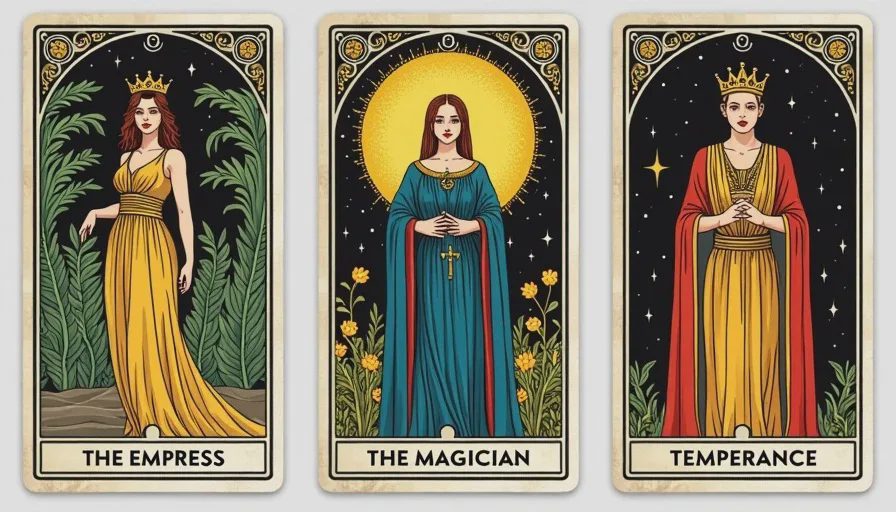
Card 1 — Your Gift Language: The Empress (Sentimental)
Card 2 — Their Gift Language: The Magician (Practical)
Card 3 — The Bridge: Temperance (Blend)
Rachel was a sentimental giver. She spent weeks searching for the perfect vintage necklace, the framed photograph, the object that carried a memory. She was giving from her heart. She was telling him: "I remember us. I remember our history. Here's a piece of it."
But Tom was a practical receiver. He didn't want a piece of history — he wanted something he could use. A good knife. A comfortable sweater. A tool that made his life easier. When Rachel gave him memory, he heard: "Here's something for the shelf." When he wanted: "Here's something for your hands."
The Bridge was Temperance: blend. Not abandon sentiment — but attach it to something useful. A leather journal with a memory written inside. A beautiful, functional thing that carried the story Rachel wanted to tell.
Tom's Cards:
Card 1 — Your Gift Language: The Magician (Practical)
Card 2 — Their Gift Language: The Empress (Sentimental)
Card 3 — The Bridge: The Star (Patience)
Tom was a practical giver. He bought things that solved problems. A better coffee maker. A heated blanket. A tool that made her life easier. He was telling her: "I see you. I see what you need. Here's help."
But Rachel was a sentimental receiver. She wanted the story. She wanted to know he'd remembered. When Tom gave her something useful, she heard: "I don't understand you." When she wanted: "I see you. I see who you really are. And I'm paying attention."
The Bridge was The Star: patience. Tom wasn't going to become a sentimental giver overnight. But he needed to start — not with the perfect gift, but with a small, consistent practice. A note in her bag. A single flower on the kitchen table. Small things that said "I'm learning."
What They Did Next
Rachel and Tom didn't fix everything overnight. But they started paying attention.
Rachel bought Tom a high-quality leather work apron for his workshop — practical, useful, the kind of thing he'd use every day. But she had it embossed with his initials and a small bird, a reference to a conversation they'd had on their first date. Practical and sentimental.
Tom bought Rachel a beautiful, simple ring — not expensive, not elaborate, just a thin band of silver. He gave it to her and said: "This is for the promise that I'll keep learning."
She wore it every day.
They still have moments where they miss each other. Of course they do. They're two different people with two different ways of expressing and receiving love.
But now they know the map. And that changes everything.
A Small Exercise for You
If you're reading this and you suspect you and your partner speak different gift languages, I want to give you an exercise. It's not tarot, but it's tarot-adjacent — it's about looking at what's already there.
Write down the last five gifts your partner gave you. Not the value — the thing. A necklace. A book. A cooking class. Whatever it was.
Now ask yourself: What were they trying to say? Not "what did they give" — what did they mean? Were they trying to make you feel remembered? Helped? Shared-with? Promised?
Now think about the last five gifts you gave them. Same question: What were you trying to say?
Ask yourself: Are those the same thing? If you were trying to say "I see you" and they were trying to say "I want to help you" — there's your gap.
What I've Learned From Watching This Play Out
I've done this spread for twenty couples now. Some in therapy, some over coffee, some through emails from readers who found the blog and recognized themselves.
Here's what I've seen:
The couples who learn each other's languages don't become the same. They don't both become sentimental or both become practical. They stay themselves — but they add capacity.
Tom didn't become a sentimental giver. He's still practical. But now he adds a note to the practical thing. He writes a memory on a piece of paper and tucks it into the box. He says: "This is for what you need. And this is for what you hold."
Rachel didn't become a practical giver. She's still sentimental. But now she asks herself: "Can I tell the story through something they'll actually use?" She finds vintage books, not vintage jewelry. Something with pages, with words, with a story that unfolds.
The gift isn't the object. It never was.
The gift is the translation.
And translation is a choice.


No notes yet — write the first one.