Let me tell you about the hardest gift I ever had to choose.
It wasn't for my father. It wasn't for Eli. It wasn't even for a client.
It was for my graduate school supervisor, Dr. Patricia Holloway — a woman I worked alongside for two years, shared an office with, ate lunch with three times a week — and realized at the end of it that I had absolutely no idea what she actually liked.
I knew her credentials. I knew her publications. I knew she drank black coffee from a mug that said "Therapist, Not Friend" (which, in hindsight, should have been a clue). But what did she want? What would light her up? What would make her smile the way my clients smiled when they finally understood something about themselves?
I didn't know.
And I was a therapist. I'd spent years learning to read people.
That's when I realized: knowing someone isn't the same as understanding them. And understanding them isn't the same as knowing what they want from you.
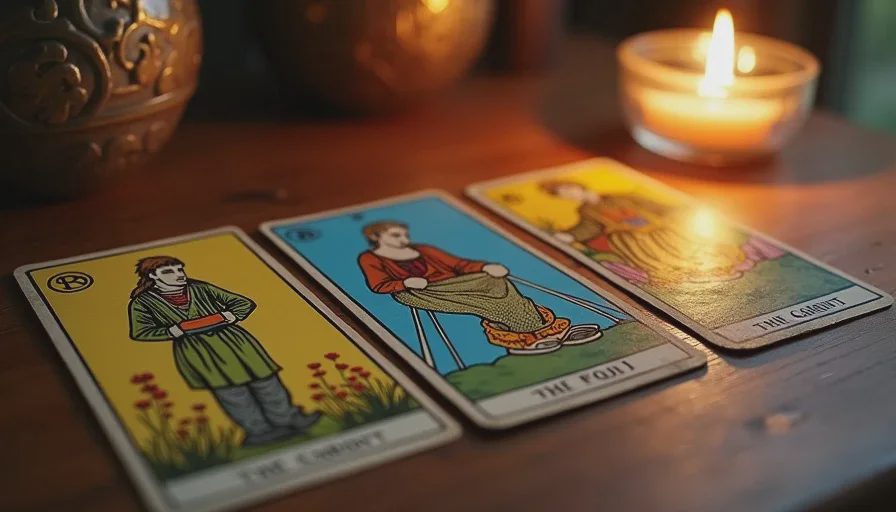
So I did what I always do when I'm stuck. I pulled cards.
Why Three Cards?
You don't need a full Celtic Cross spread to figure out a gift. You need three questions.
The spread I'm about to teach you is the one I developed during my last year in the clinic, when I realized that my clients' gift anxiety usually came down to three things:
What am I missing about this person?
What are they actually asking for (without saying it)?
What do I need to know before I choose?
I designed this spread specifically for the people who stump us. The ones we love but don't quite get. The ones who orbit our lives but stay slightly out of reach. The ones whose wants feel like a foreign language.
Here's how it works.
The Three Cards (and What They Mean)

Card 1 — What I See
What you already know about this person. The surface. The public face. The version they show the world.
This card is your starting point — and your warning. Because what you see isn't always what's there. Sometimes it's what they want you to see. Sometimes it's what you've projected onto them. And sometimes — just sometimes — it's exactly right, and you've been looking at the truth the whole time without noticing.
If this card shows up as:
The Empress: You see them as nurturing, abundant, giving. The one who holds everything together. But that's not the whole story.
The Hermit: You see them as independent, solitary, self-sufficient. They don't seem to need anything. That's a mask.
The Magician: You see them as capable, confident, resourceful. The one who always has an answer. They don't ask for help. That's your cue to look closer.
Card 2 — What They Need (That They Haven't Said)
The unspoken request. The thing they can't or won't ask for directly. The need that hides inside the want.
This is the heart of the spread. Because what people say they want and what they actually need are often two different things. Your brother says "I don't need anything." What he means is "I don't know how to ask." Your partner says "surprise me." What they mean is "I need you to see something I can't see myself."
If this card shows up as:
The Moon: They need clarity. They're confused about something — probably about themselves. Your gift shouldn't tell them who they are; it should help them see who they are.
The Star: They need hope. They've been in a dry season. Your gift should feel like light. Like a reminder that something good is still coming.
The Hanged Man: They need permission to let go. They're holding on to something that's draining them. Your gift should whisper it's okay to release this.
Card 3 — What the Gift Should Say
The message your gift is carrying. Not the object — the words behind it.
Every gift is a letter. This card tells you what words that letter should contain. Sometimes the right gift is saying "I see your struggle." Sometimes it's saying "I see your joy." Sometimes it's saying "I'm not going anywhere."
If this card shows up as:
The Lovers: The gift should say "I choose you. I see us. I'm in this with you."
The Tower: The gift should say "I know something has to change. I'm not afraid of it with you."
The World: The gift should say "You've done something incredible. I see the whole of it. I'm proud of you."
Let Me Show You How This Works in Real Life
Last week, a reader named Sarah sent me a message. She'd been dating a man named David for eighteen months. She loved him. She wanted to marry him. And she had no idea what to get him for his thirty-seventh birthday.
"I know his coffee order," she wrote. "I know his shoe size. I know he likes hiking and hates mushrooms. But when I think about what would actually make him feel something — I'm blank."
She didn't give me his chart. She didn't give me his life-path number. She just gave me the person she saw, and the questions she couldn't answer.
So I sat down and pulled three cards for her.
Card 1 — What She Sees: The Fool
She sees him as fun-loving, spontaneous, a little reckless. The guy who'll take a road trip without planning it. The one who makes her laugh when she's too serious. She loves that about him.
But The Fool, in a gift spread, is also a warning. She sees his lightness. She doesn't always see his depth. And if she gives him something that reinforces the "fun guy" image, she might miss who he is underneath it.
Card 2 — What He Needs: The Hermit
He needs to be taken seriously.
Not in a heavy way. Not in a "let's talk about your childhood" way. But this man is thirty-seven. He's building a life. He has fears and questions he doesn't bring to Sarah because she's the one who keeps things light. And the Hermit says: he's been thinking about things. He needs to know someone sees that part of him too.
Card 3 — What the Gift Should Say: The Chariot
"I trust your direction. I'm following. You're not leading alone."
Not a hiking backpack. Not a funny mug. Something that says: I see you on your journey, and I'm with you. The gift should be a companion — not an adventure, but a constant.
What did I recommend? (We spent forty-five minutes on this, but here's the short version.)
A leather-bound field journal. The kind that fits in a jacket pocket. Not for planning — for noticing. For the things he thinks about when he's walking alone. And inside the front cover, a note from Sarah: "Write down the things you don't say. I'll read them. I promise."
She gave it to him last weekend. She messaged me Monday morning.
"He sat in the kitchen for two hours with that notebook. Didn't open it. Just held it. Then he looked at me and said, 'I didn't know you knew that.'"
He hadn't said a word. And the Hermit finally felt seen.
Now It's Your Turn
I'm going to give you a set of questions to walk through with your own cards. If you don't have a tarot deck at home, you can use the single-card exercise at the end.
For Each Card, Ask Yourself:
Card 1 — What I See
What do I most admire about this person?
What's the version of them they show the world?
What do I assume they're like, without really knowing?
Card 2 — What They Need (But Haven't Said)
What do they never ask for?
What are they proud of that they'd never admit?
What would they want more than anything — but would never choose for themselves?
Card 3 — What the Gift Should Say
If I could say one thing to this person, what would it be?
What do I wish they knew about how I see them?
When they open this, what do I want them to feel?
If You Don't Have Cards — Here's What to Do
You don't need a physical deck for this spread. You need three prompts.
Write these three questions on separate pieces of paper. Fold them. Close your eyes. Hold the person in your mind. Then pick one piece of paper at random, unfold it, and answer the question as honestly as you can.
Repeat for the other two.
I do this when I'm in a flea market, holding a vintage deck that's too old to shuffle, and I need to make a decision before the seller changes their mind. It works. It always works.
Because the cards aren't the magic.
You are.
A Final Truth
Here's what I know about the people we can't figure out.
They're not mysterious because they're hiding something. They're mysterious because they're complicated. The same way you are. The same way I am. They have layers — and the layers sometimes contradict each other.
They want to be seen and left alone.
They want to be known and protected.
They want surprise and safety.
No gift can do all of that. But a gift chosen with three questions — with three cards — can do something better.
It can say: I see you're complicated. I love you anyway. And I'm paying attention.
That's the letter.
Now go wrap it.


No notes yet — write the first one.